Premium BSE detector
4-quadrant detector for calibrated measurements and 3D analyses
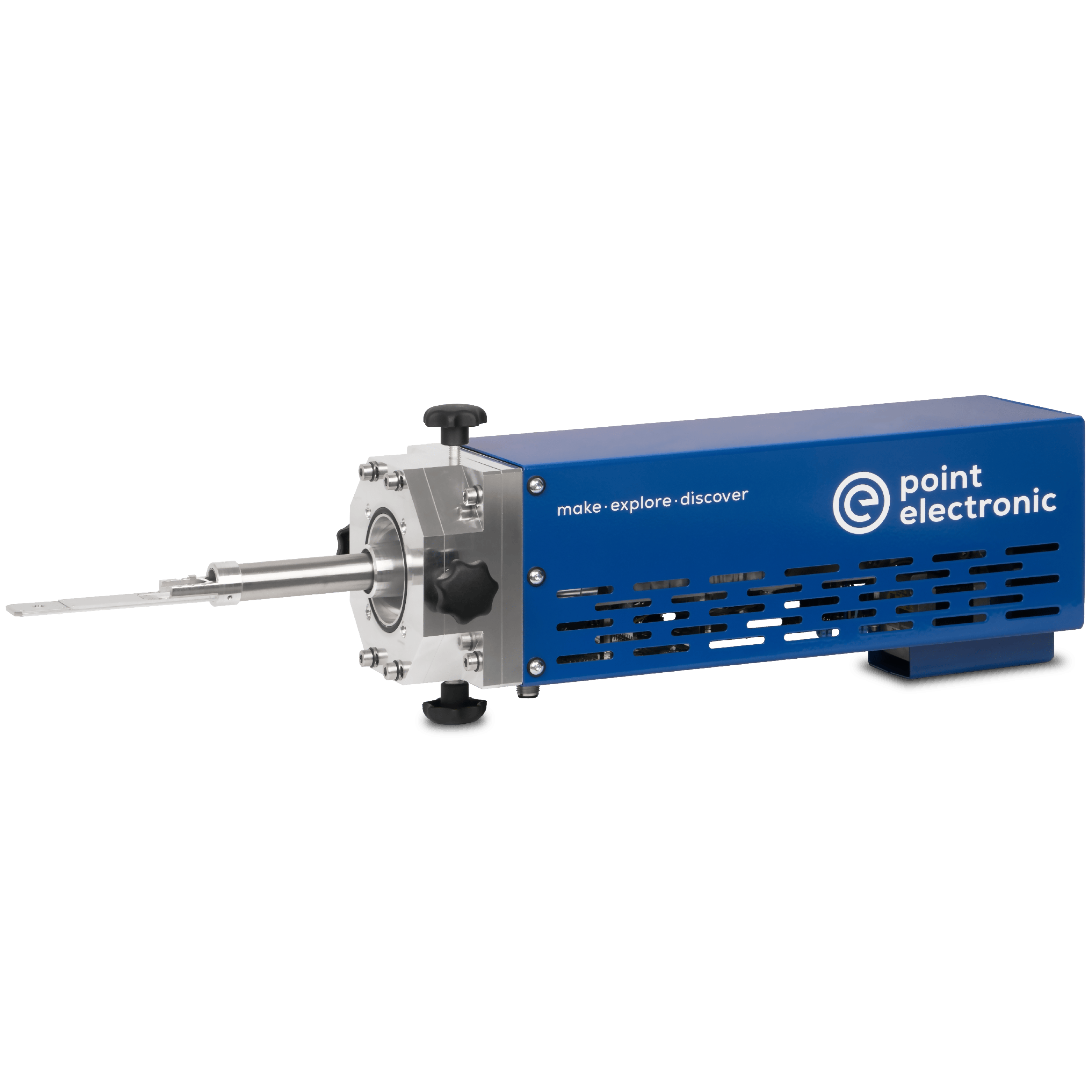
Premium BSE detector is our highest performance Si-based detector for materials science, geology and industrial applications.
A four-quadrant sensor geometry is used, coupled with four independent in-situ preamplifiers, to give full flexibility for the traditional COMPO and TOPO modes, or the new calibrated 3D measurement mode with topographic reconstruction.
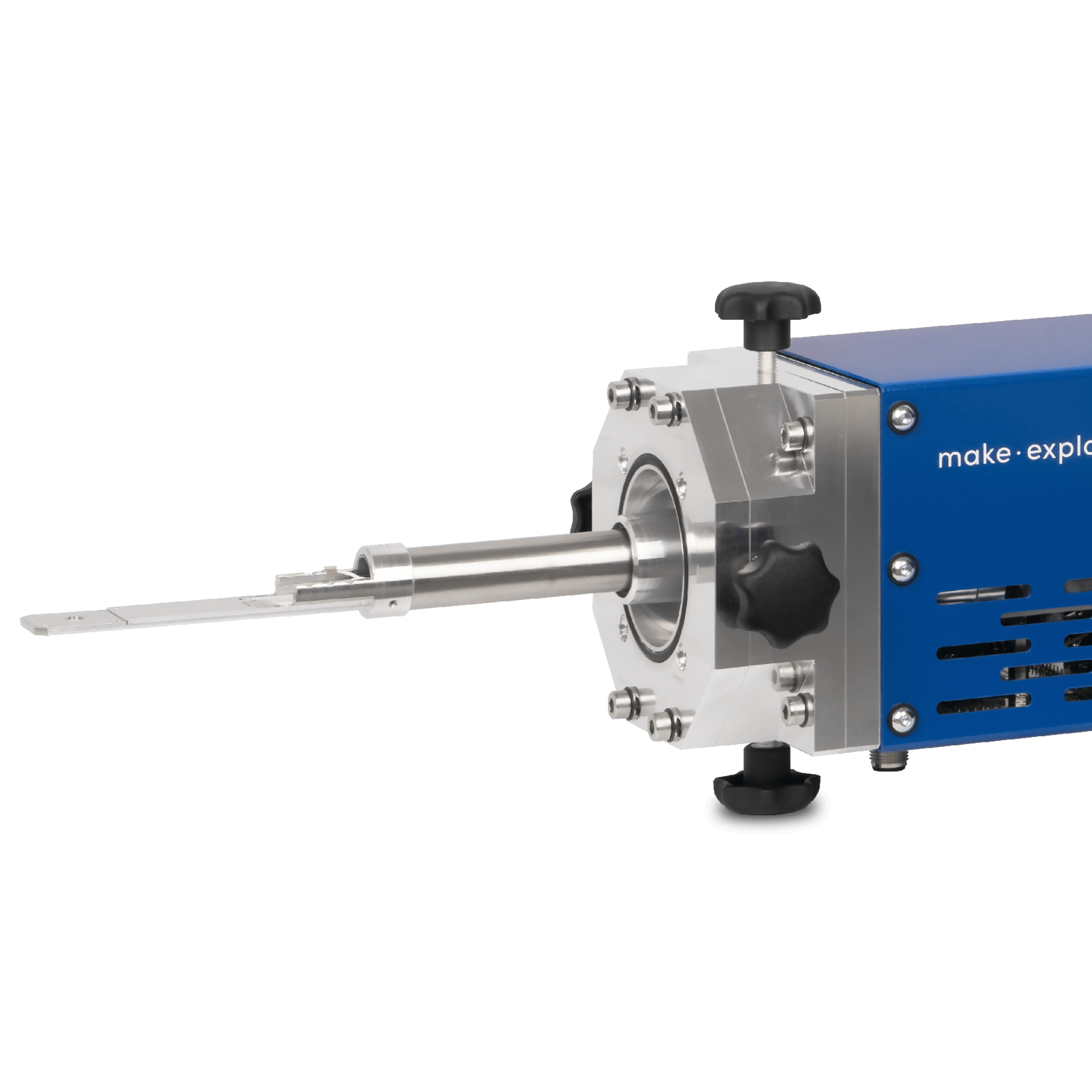
The motorised insertion/retraction mechanism allows for left/right and up/down directions, and has bellows for reliable vacuum.
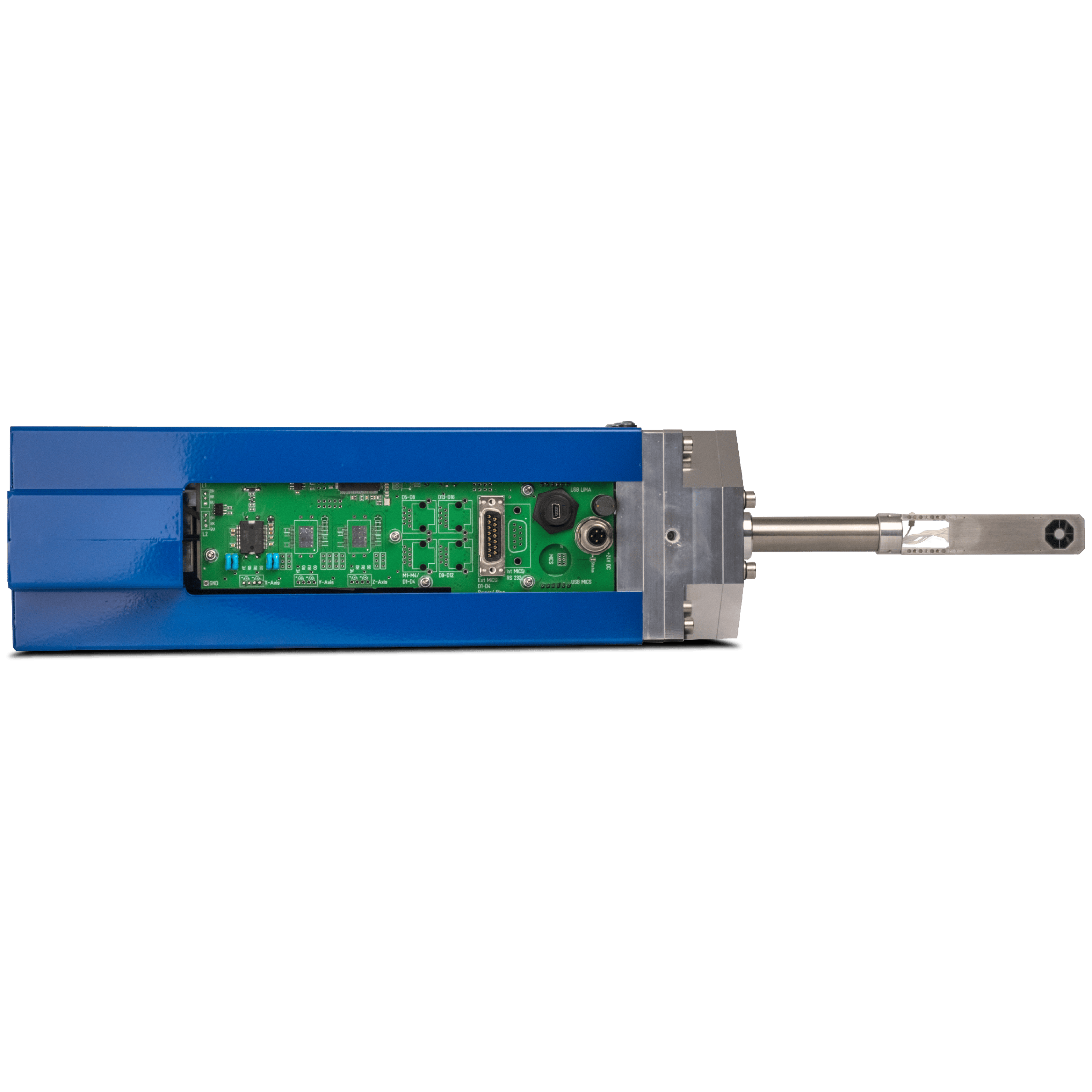
An optional MICS-4 amplifier can be embedded into the detector, for a fully self-contained detector with quantitative amplification, independent brightness and contrast controls, and hardware signal mixing.
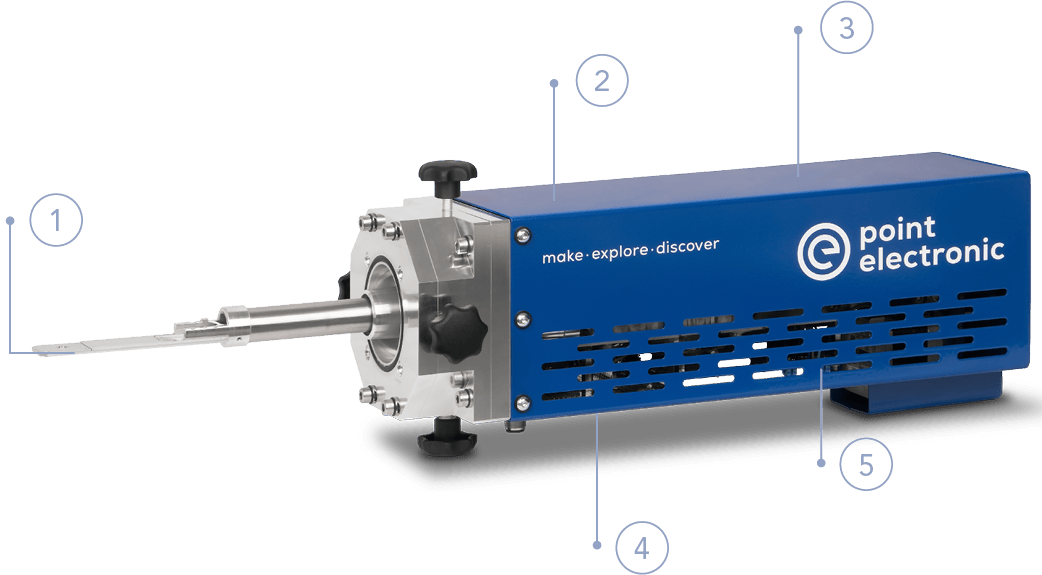
Port-mounted motorized BSE detector
Carefully selected segmented sensors are perfectly balanced with bespoke electronics and mechanics in a fully self-contained detector designed for ultimate performance and ease-of-use.
1. Premium Si sensor: Sensitive solid-state Silicon sensor with built-in 4x preamplifiers for ultimate speed and low acceleration voltage
2. XY alignment: High-precision lateral alignment with optional motorized repositioning
3. Built-in motorized insertion: Port-mounted and bellow-sealed with motorized insertion/retraction, and touch alarm
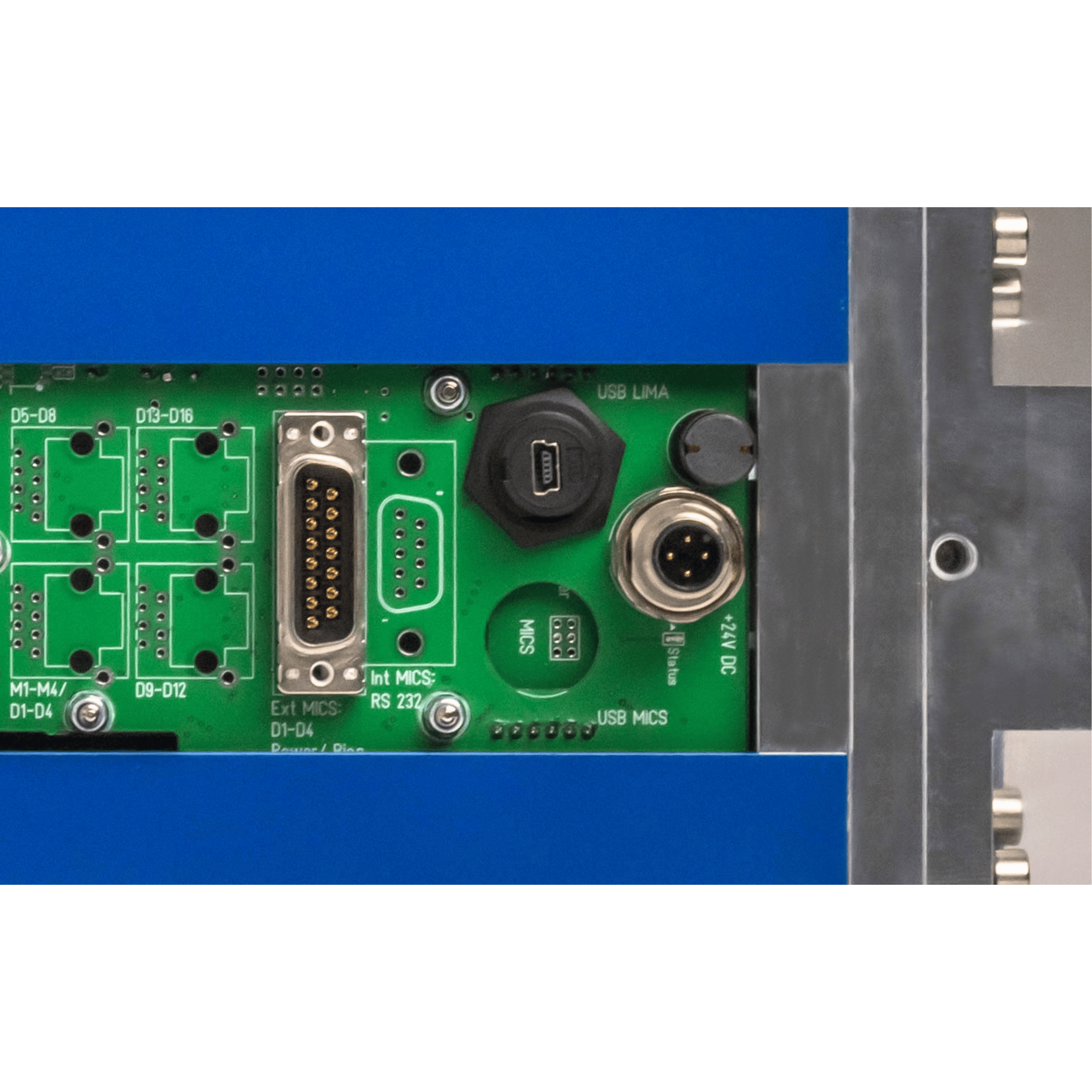
4. Standard interfaces: Control over USB 2.0 and analog video signals output on RJ45 connectors
5. Built-in amplifier and mixer: Two-stage amplification for each of the four channels, with independent and calibrated controls for brightness and contrast
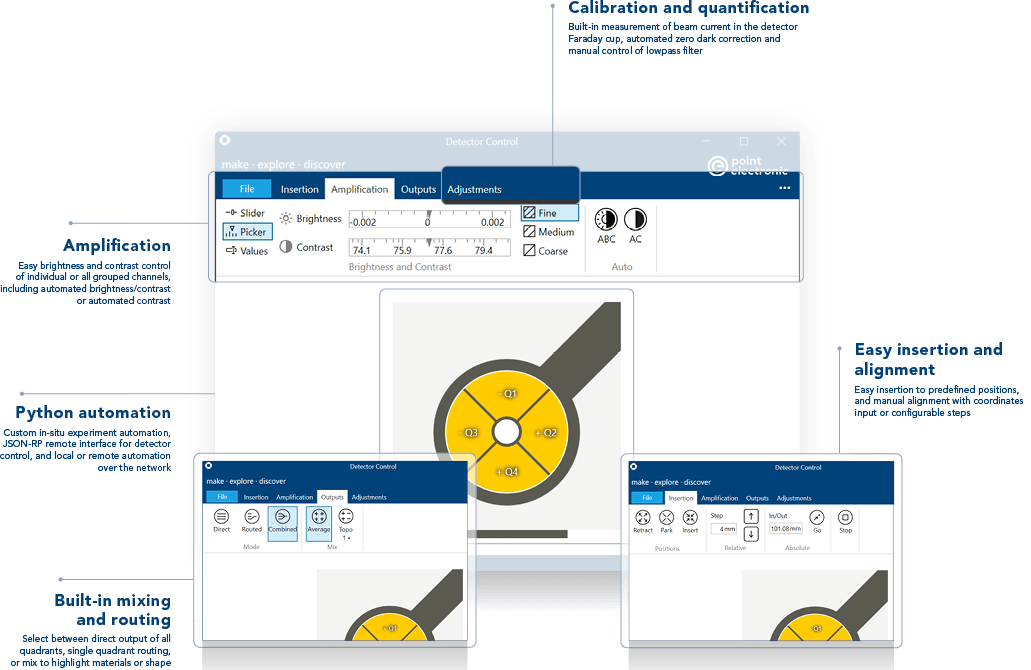
Open control with full access to all detector parameters
Engineered for performance
Designed for fast and intuitive control, to cover every advanced signal control and automation feature, and to give the best experience even for challenging BSE experiments.
-
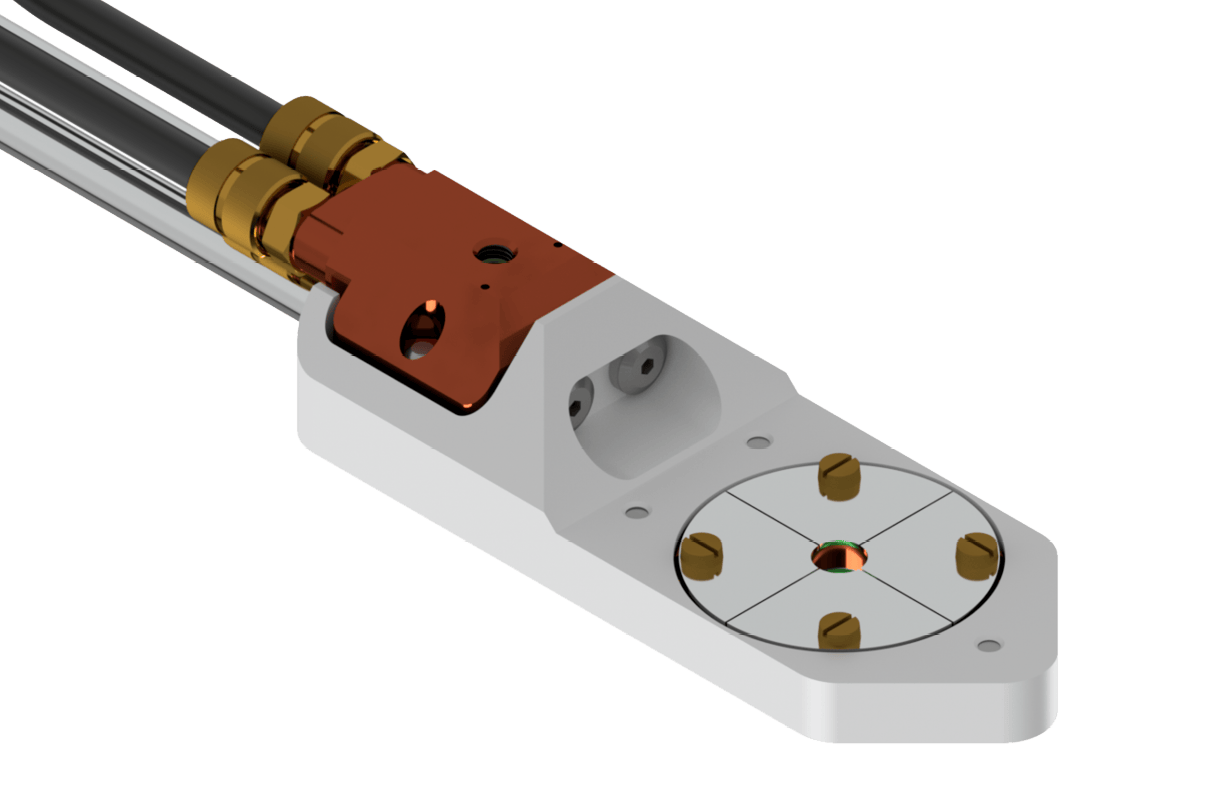
Versatile experiments
Segmented sensors in quadrant geometries
Each segment with own brightness and contrast controls
Size and geometry optimized for materials science -
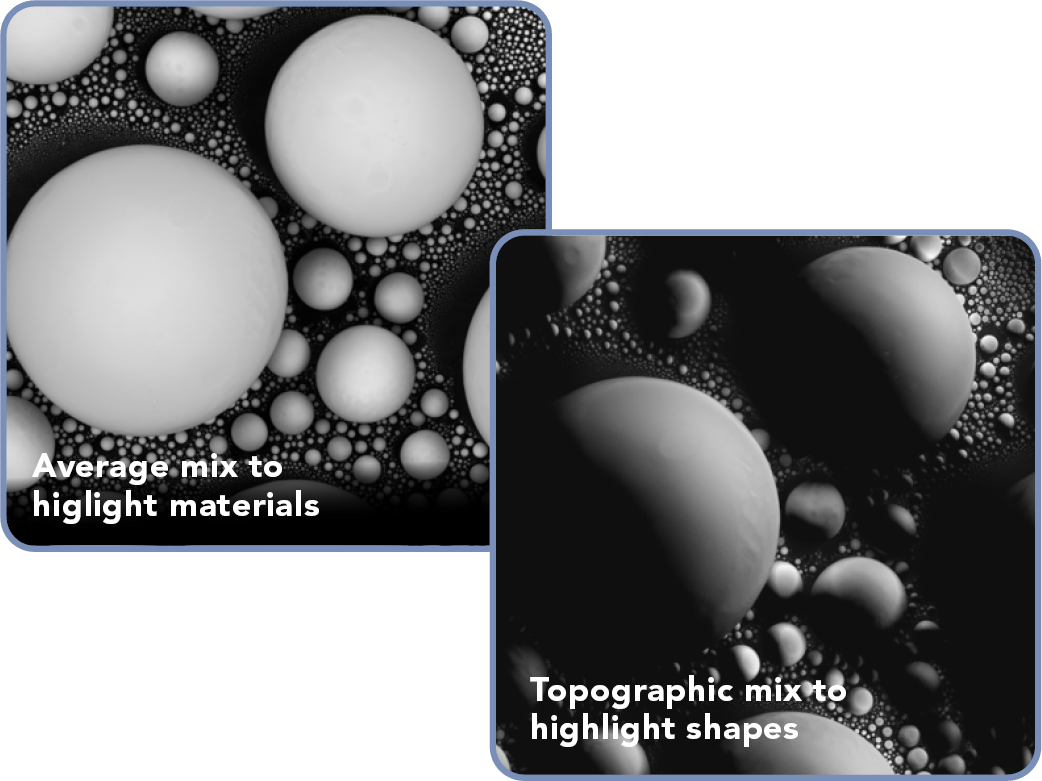
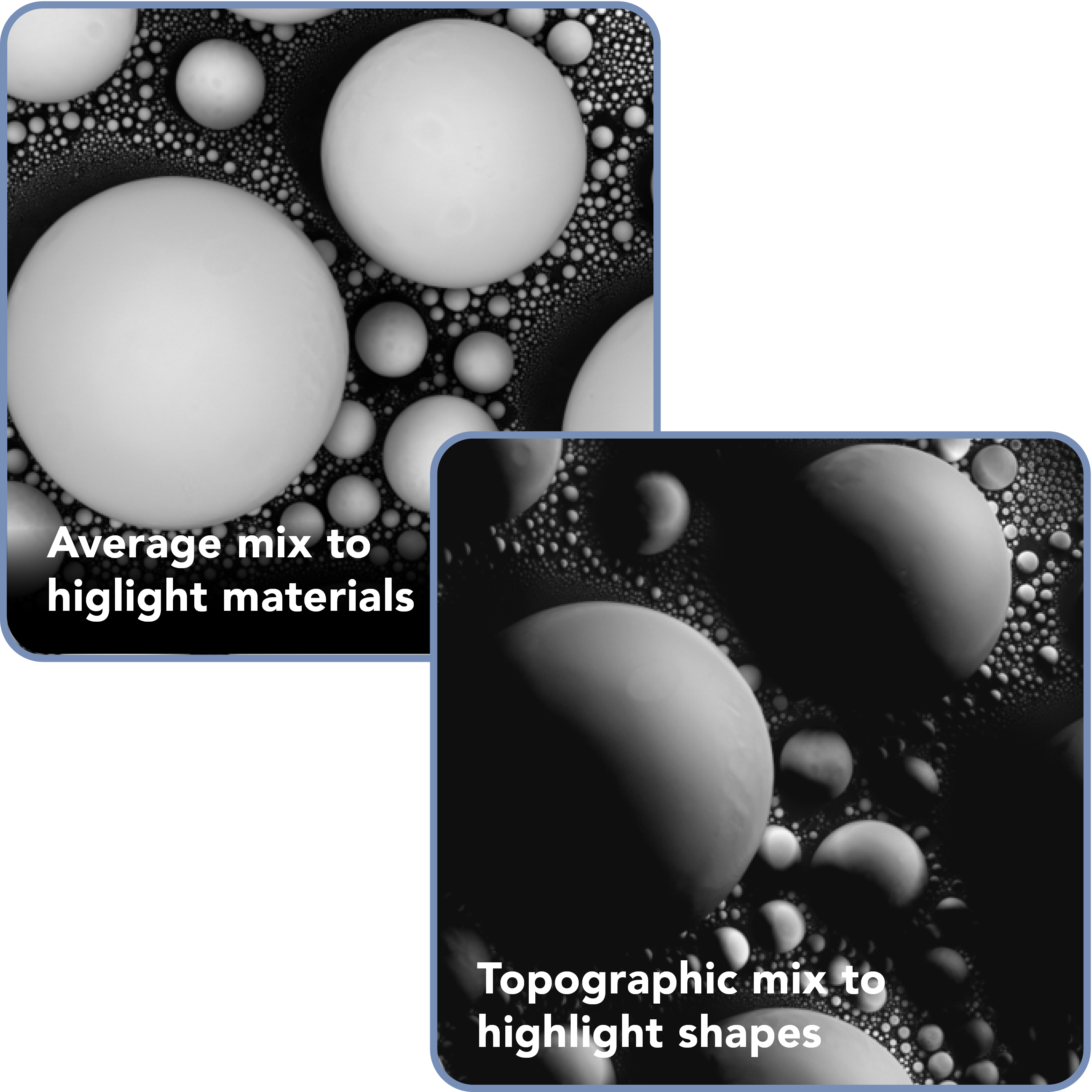
Flexible output
Output directly all four individual channels
Combine to a single output with built-in compositional or topographic mix
Route any channel to a single output
-
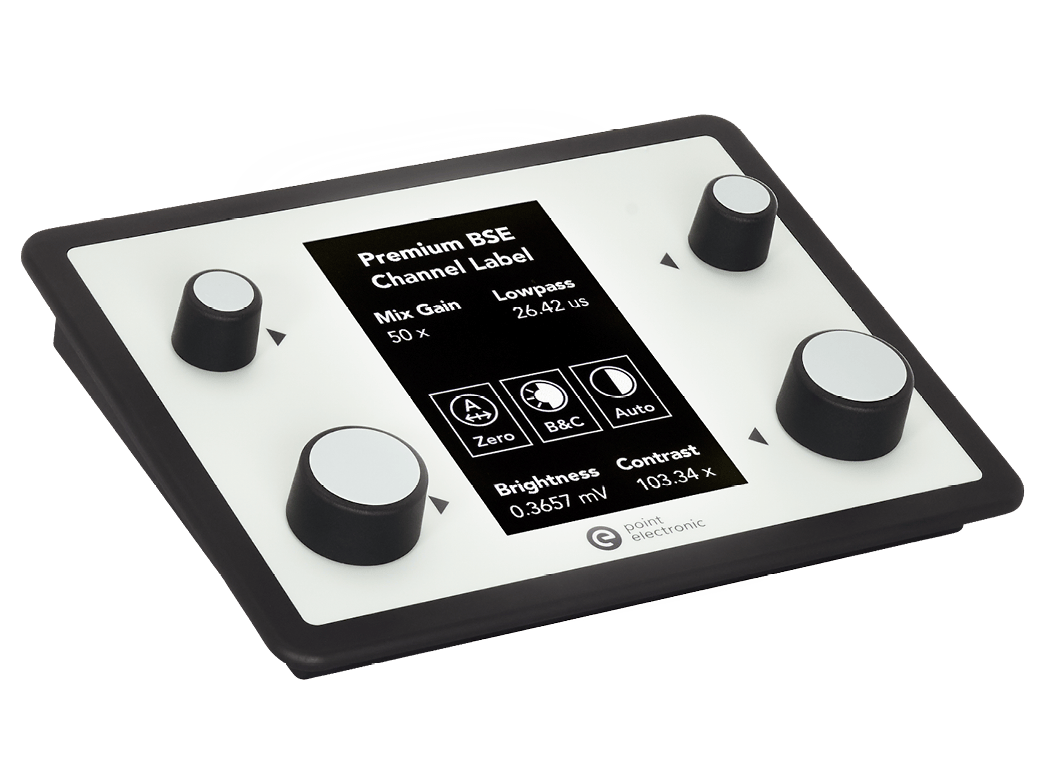
Intuitive, fast and ergonomic
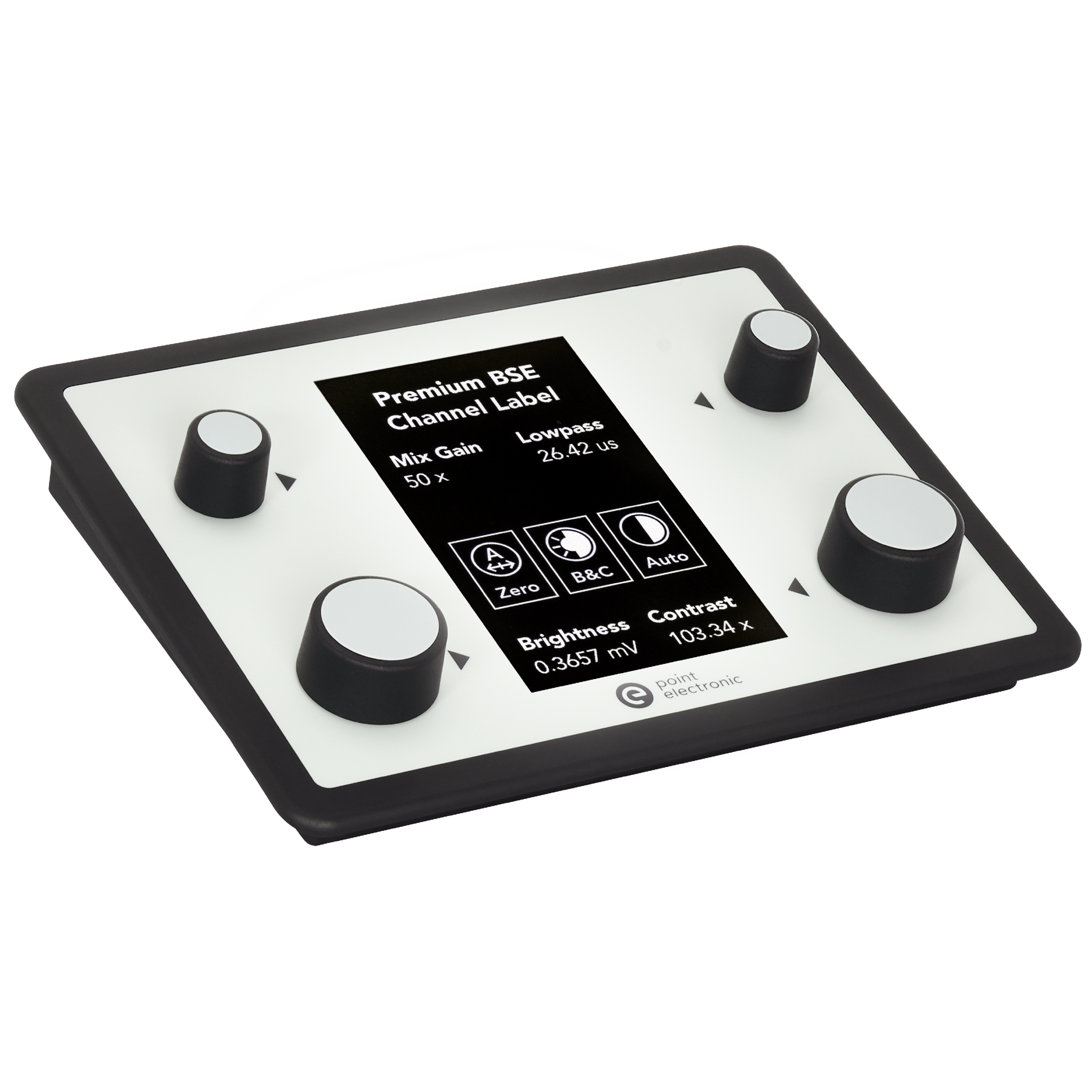
Heavy-duty hardware control panel for fast access and easy adjustments
Touch display for status and automated control
Rotary knobs for very-fine manual control -
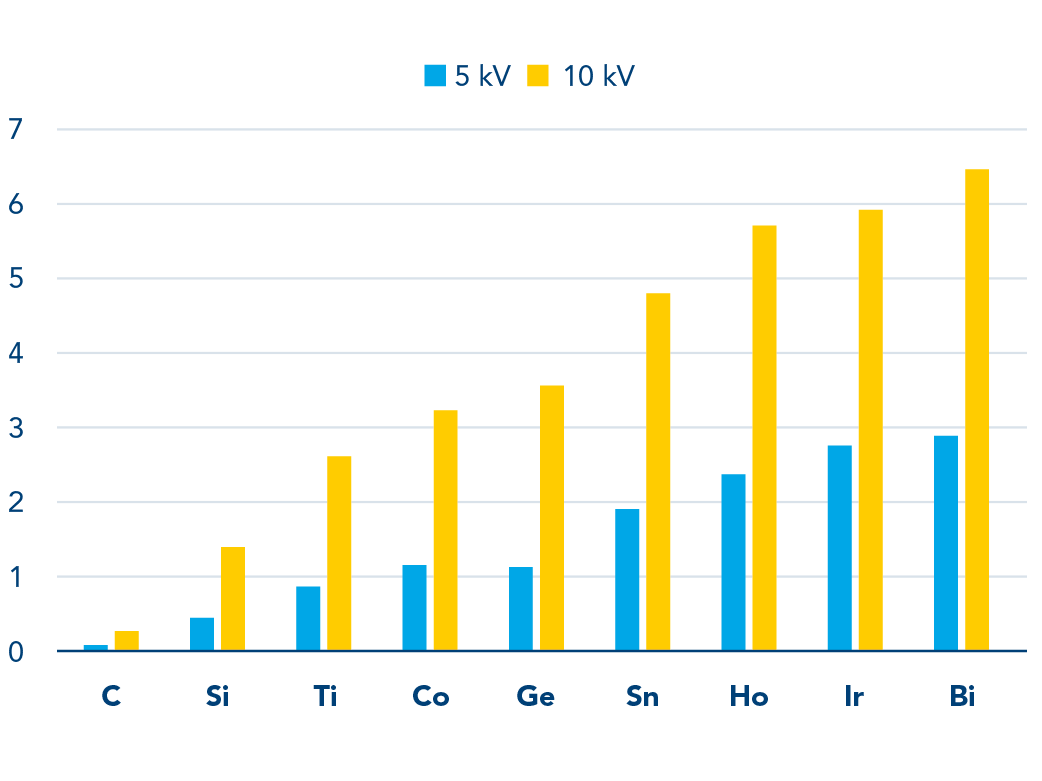
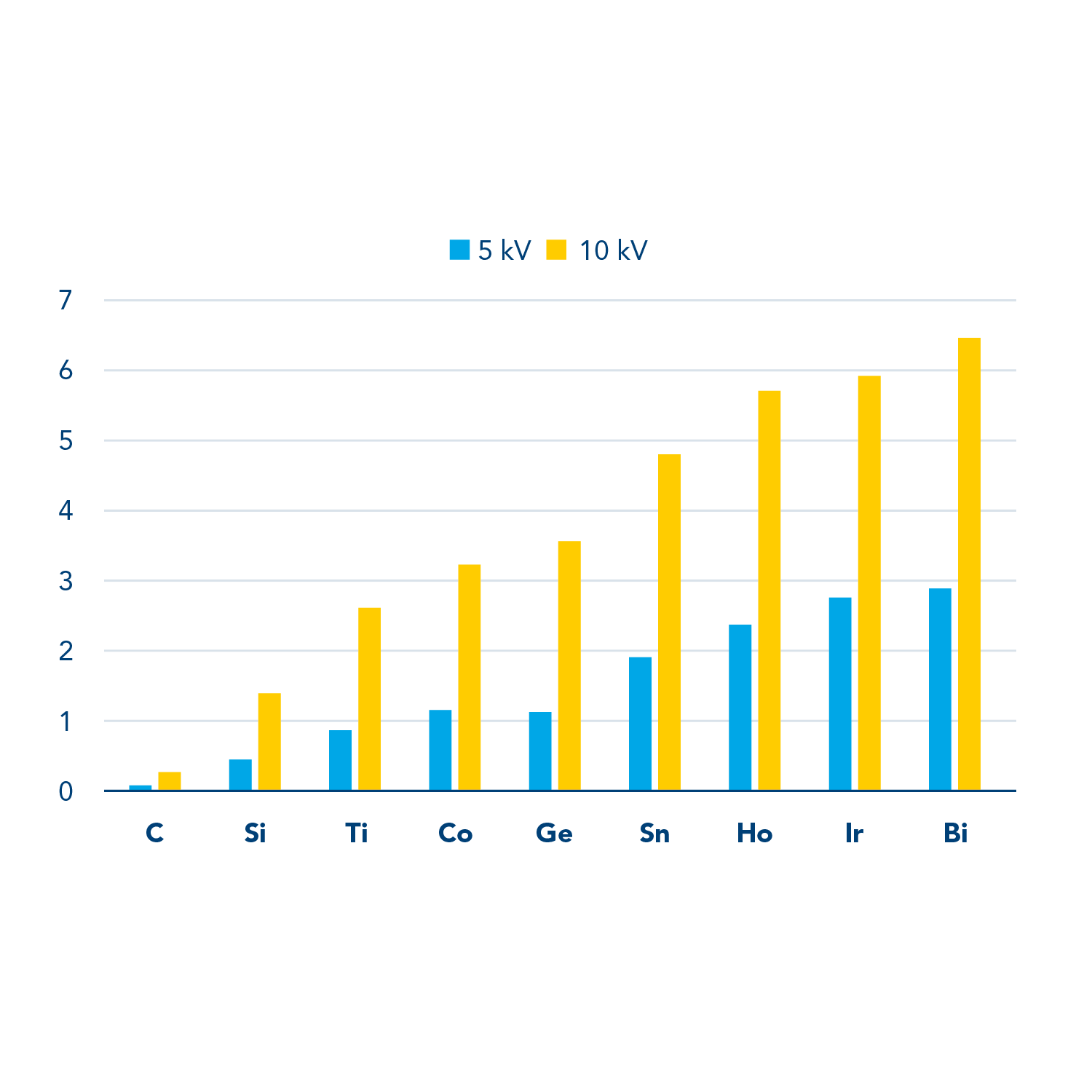
Quantitative measurements
Electronic gains, offsets and bias are factory calibrated
Electron current into the sensor can be calculated from voltage at the output of the detector
Material properties can be determined from quantified input signal -
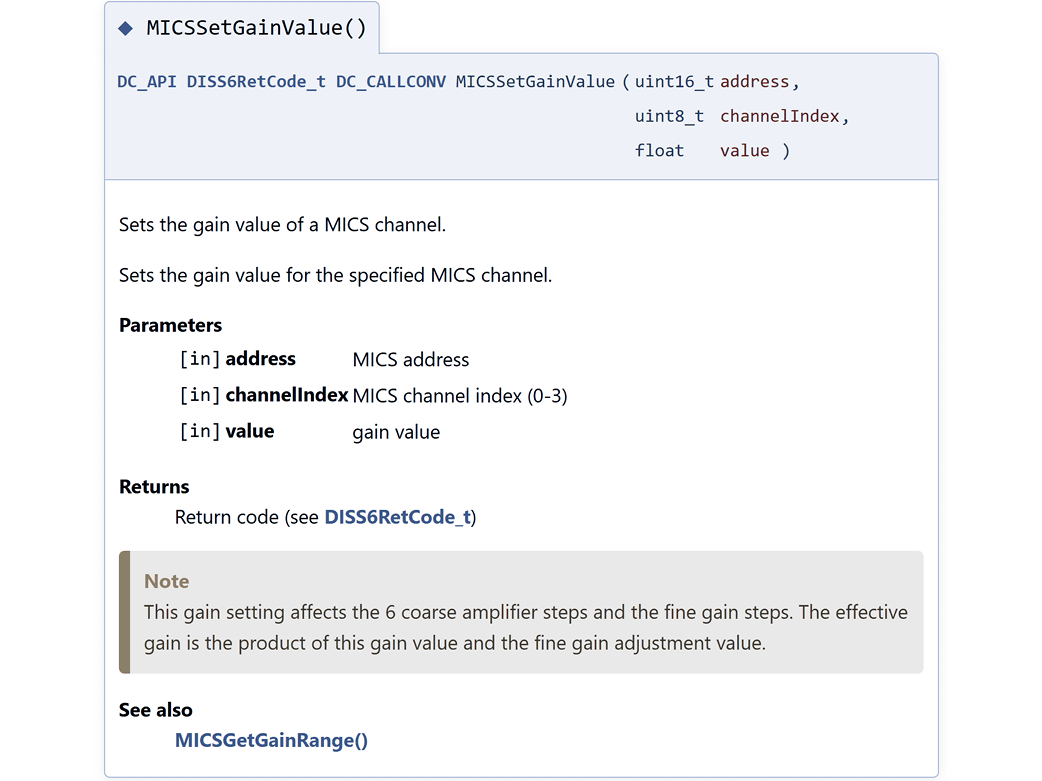
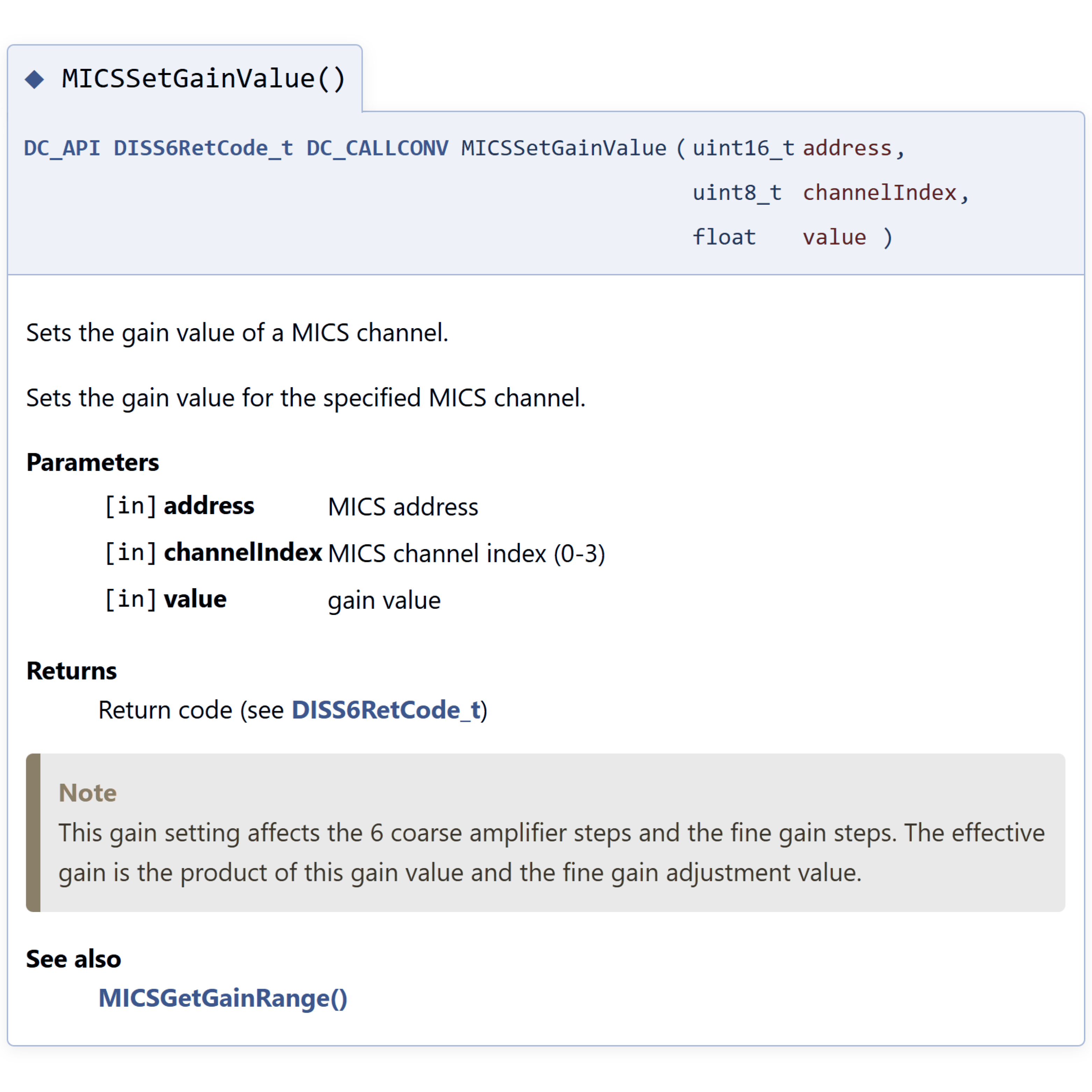
Software Development toolKit (SDK)
Control libraries for positioning and amplification
Application Programming Interfaces with simplified functions and physical parameters
Demo code in Python and other programming languages
After-sale remote support for developers
Fast, efficient and versatile detector for materials science
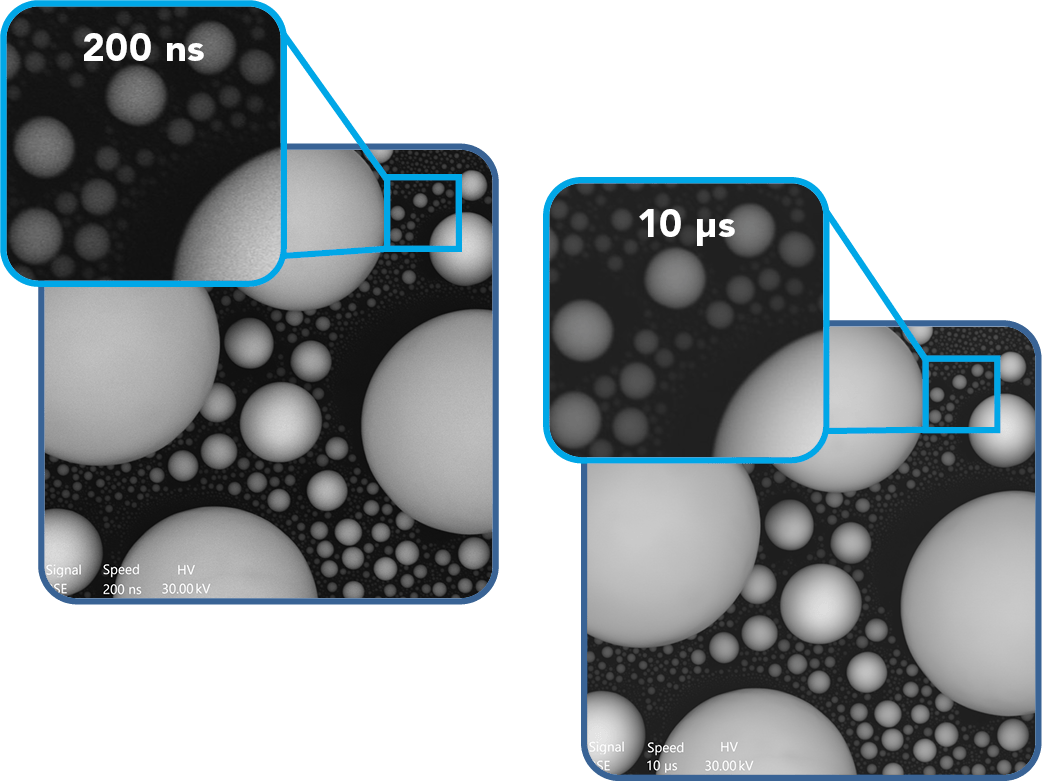
Fast sub-microsecond imaging
Speed up acquisition, now down to 200 ns/pixel dwell time.
Explore materials live, with fast, sharp and clear BSE signals.
Reduce sample charging with fast scanning and averaging.
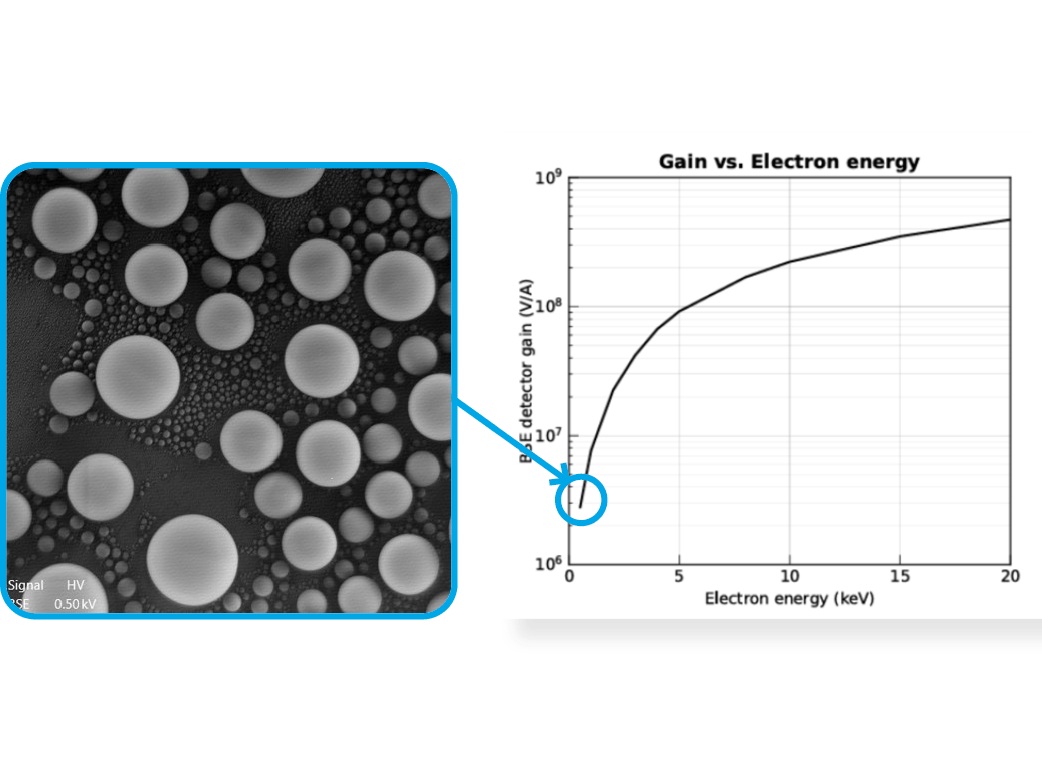
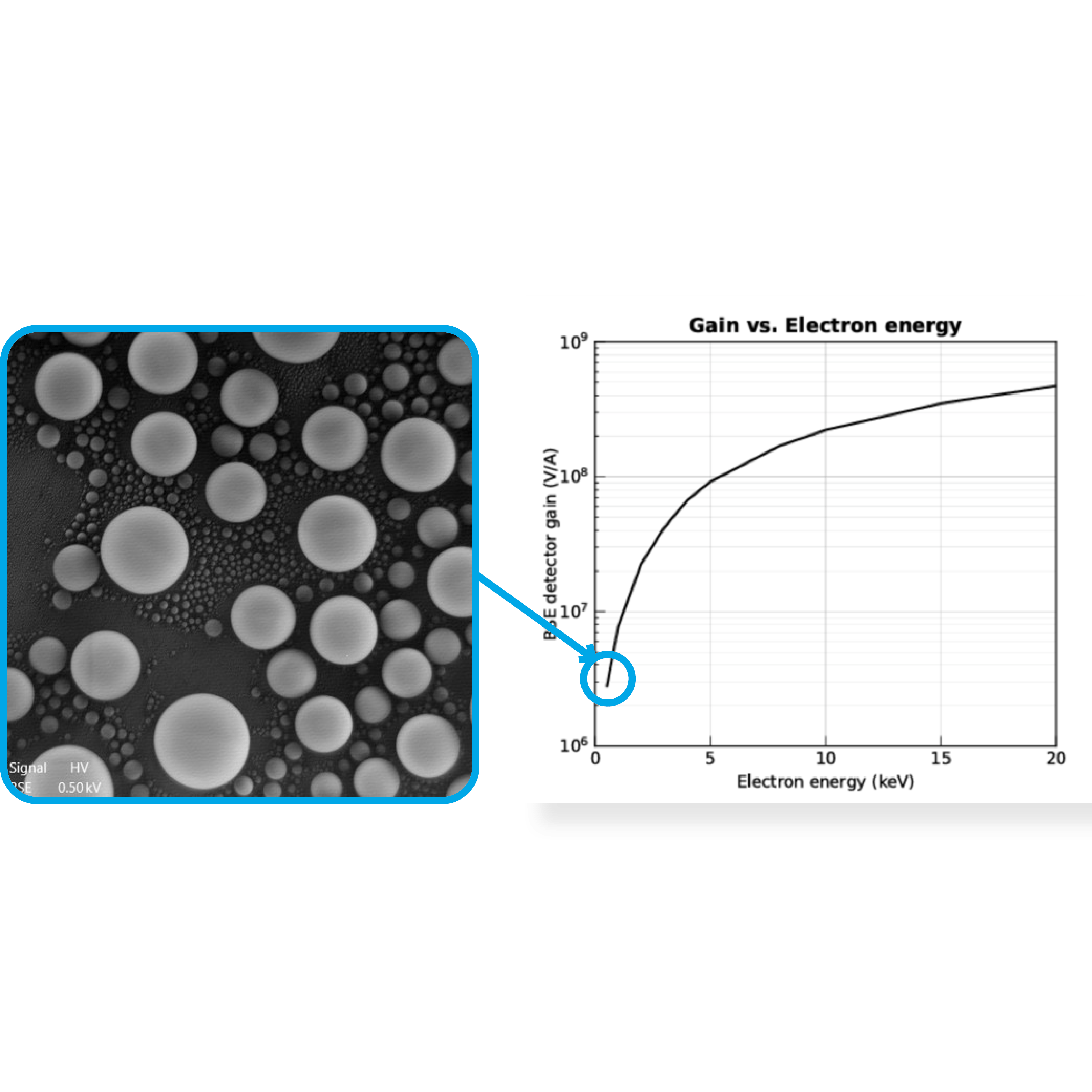
Low kVs operation
Reduce acceleration voltage, now down to 0.5 kV.
Increase spatial resolution with a smaller interaction volume.
Avoid radiation damage with a gentler electron beam.
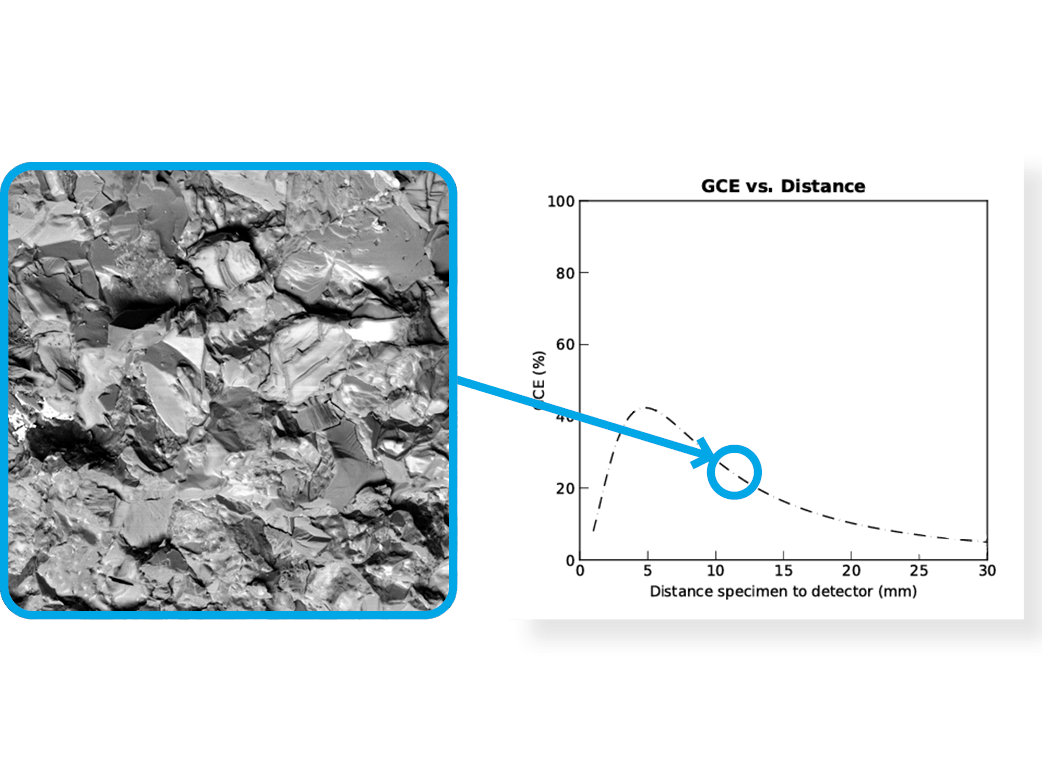
Dedicated for materials science
Retain a large field-of-view, even with the detector inserted.
Keep the sample at EDS position, with great BSE collection efficiency even at long working distances.
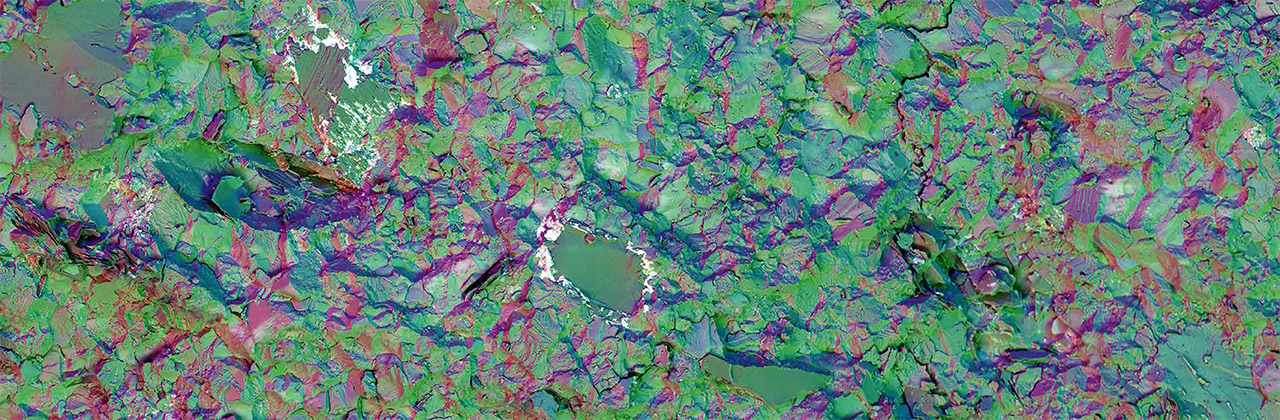
Quantitative BSE (qBSE)
- map density with high-spatial resolution
- characterise distribution of phases
- reveal crystallography with orientation contrast
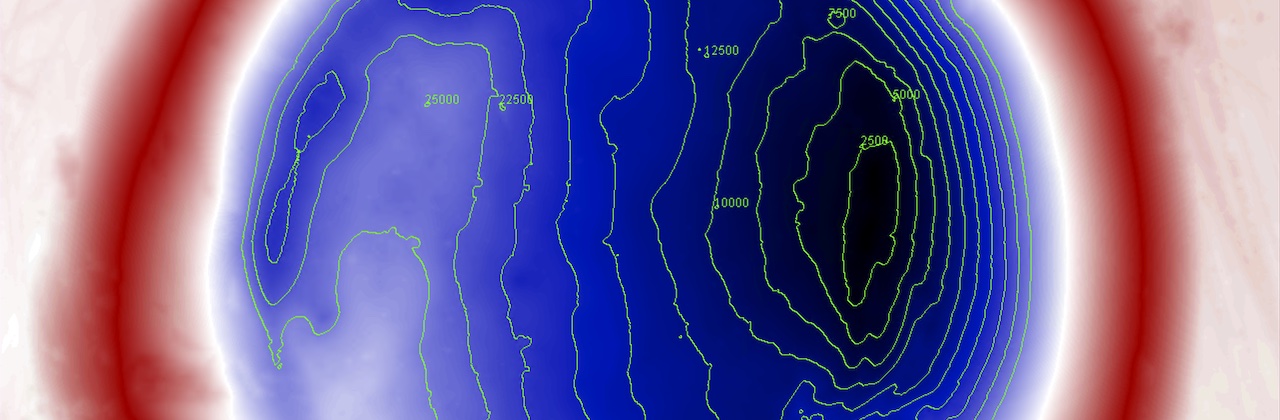
BSE Topography
- analyse 3D surfaces and complex surfaces
- monitor in-situ reactions, including high-temperature
- characterise milling and depoisition in FIB-SEM
Premium BSE front-end
Sensor
- Detector-grade Si
- Four-quadrant (4Q) geometry
- 5 mm inner diameter
- 16 mm outer diameter
- 0.5 kV minimum acceleration voltage
Pre-amplifier
- 4x in-situ mount
- 105 V/A gain
- 200 ns minimum dwell time (gain dependent)
Electronics back-end
Main amplifier
- 4x independent signal channels
- -1.25 … 1.25 V (-50…50 mV with attenuator) input offset
- 1× … 1,800× gain
- -1.25 … 1.25 V output offset
- 3.4 MHz…34 Hz low-pass filter
- Automated 4Q global brightness and contrast
- Automated input offsets (dark correction)
- Automated gain normalization (bright correction)
- COMPO hardware mix signal (mean of BSE1...BSE4)
- TOPO hardware mixed signal (mix of BSE1...BSE4)
Interfaces
- 1x USB 2.0 for amplifier control
- 1x USB 2.0 for motion control
- 1x RJ45 signal outputs
Signal outputs
- Typ. 4x -0.5...0.5 V output range
Insertion/retraction mechanics
- Port mounted, with vacuum bellows
- Motorized insertion/retraction motion
- -4...4 mm lateral and height alignment
- 10 µm repositioning step size
- Touch alarm, with automated stop and retraction
Display Panel
- Panel interaction with software via events and actions
- Auto Brightness & Contrast, Auto Contrast, Auto Zero
- Display 480 x 800 px (4.3“)
- Resistive touch
- 4 encoders
- 360 increments per revolution
- Beeper and vibration motor for haptic and acoustic feedback
- Sturdy metal housing for stability
- USB interface for control and power
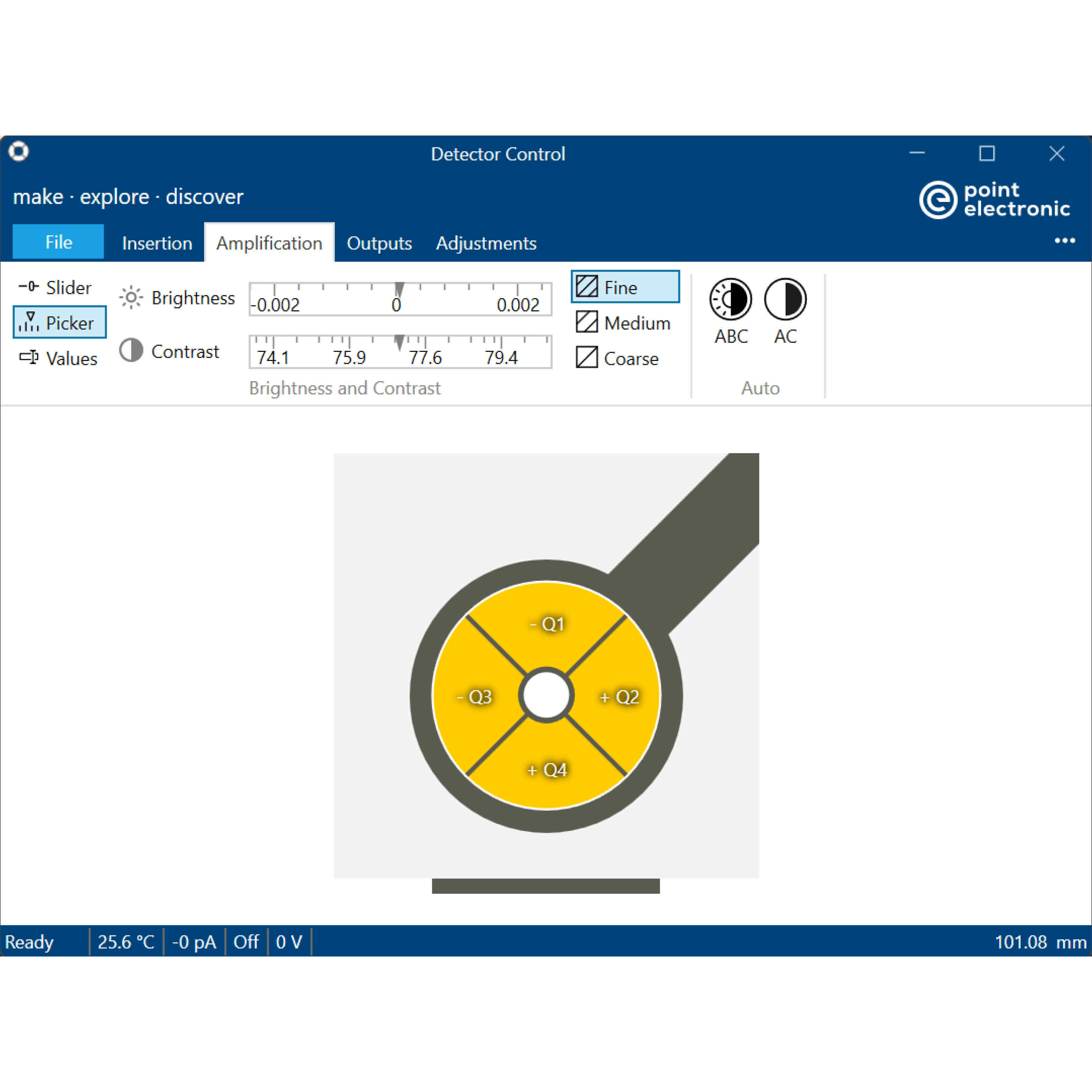
Detector Control software
Control
- Detector schematic with selectable quadrants
- Bias, brightness and contrast controls
- Individual quadrants, or grouped control
- Automatic inserted/retracted positions
- Fine repositioning/adjustments in mm units
In-situ automation
- JSON/RPC interface for remote control
- Automated brightness and contrast
Operating system
- Windows 11 … Windows 7
-
BSE Detektor with LIMA-Arm retraction mechanism
-
-
-
-
Hardware Control Panel with touch display
-
Detector Control software
-
Software Development toolKit
-
Flexible channel output
-
Quantitative measurements
-
Fast sub-microsecond imaging

-
Low kVs operation
-
Dedicated for materials science
