IMC21 2026
Aug 31, 2026 - Sep 4, 2026
- ACC Liverpool
- Liverpool, United Kingdom
- Booth no. 341
- www.imc21.org.uk

About IMC21:
IMC21 provides a global platform to share outstanding research and foster new collaborations in microscopy. Inspired by Liverpool’s rich culture, the congress emphasizes collaboration, diversity, and innovation. Through the Early Scholars Programme, it supports young scientists and nurtures the next generation of microscopists.
point electronic's topics on site:
- REVOLON TEM Scan Controller: a new standard in STEM control with unrestricted beam access with Python code, highest speed for in-situ STEM, and best 4D STEM synchronization
- OEM/ODM Electronics and Software: Fast and cost effective electronics design tailored to custom specifications.
- BSE Detection: material density mapping with high spatial resolution, hot sample characterization
- BSE Topografie: quantitatitve heigt measurements
- 3D Calibration: calibration for SEM and AFM
- Electrical Analysis
- Electrical Analysis in TEM
- Electrical Analysis in SEM
- REM Modernizations: a second life for your existing SEM – with complete new electronics and software
Your contact on site:
Don't miss our presentations.
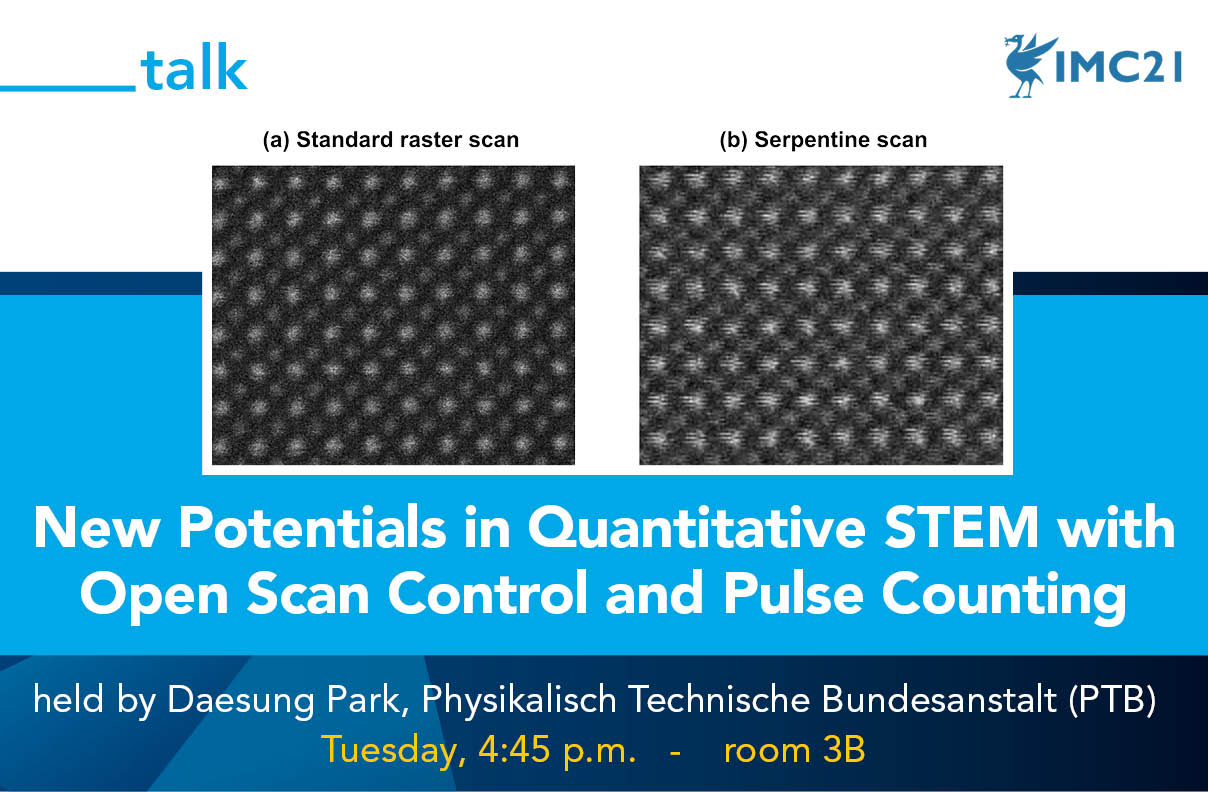
New Potentials in Quantitative STEM with Open Scan Control and Pulse Counting
Tuesday, September 1, 2026
16:45 (Europe/London)
Room 3B
In this talk, our partner Daesung Park from Physikalisch Technische Bundesanstalt (PTB) presents how combining an open TEM scan controller (REVOLON) with single-electron pulse counting (PULSE) enables faster, low-noise and fully calibrated quantitative HAADF-STEM imaging. We show that advanced scan paths (such as serpentine, spiral and Hilbert patterns) and post‑processing of scan-coil hysteresis overcome flyback and distortion limits of conventional raster scanning, allowing robust nanometrology at atomic resolution.
Our contact: info@pointelectronic.de
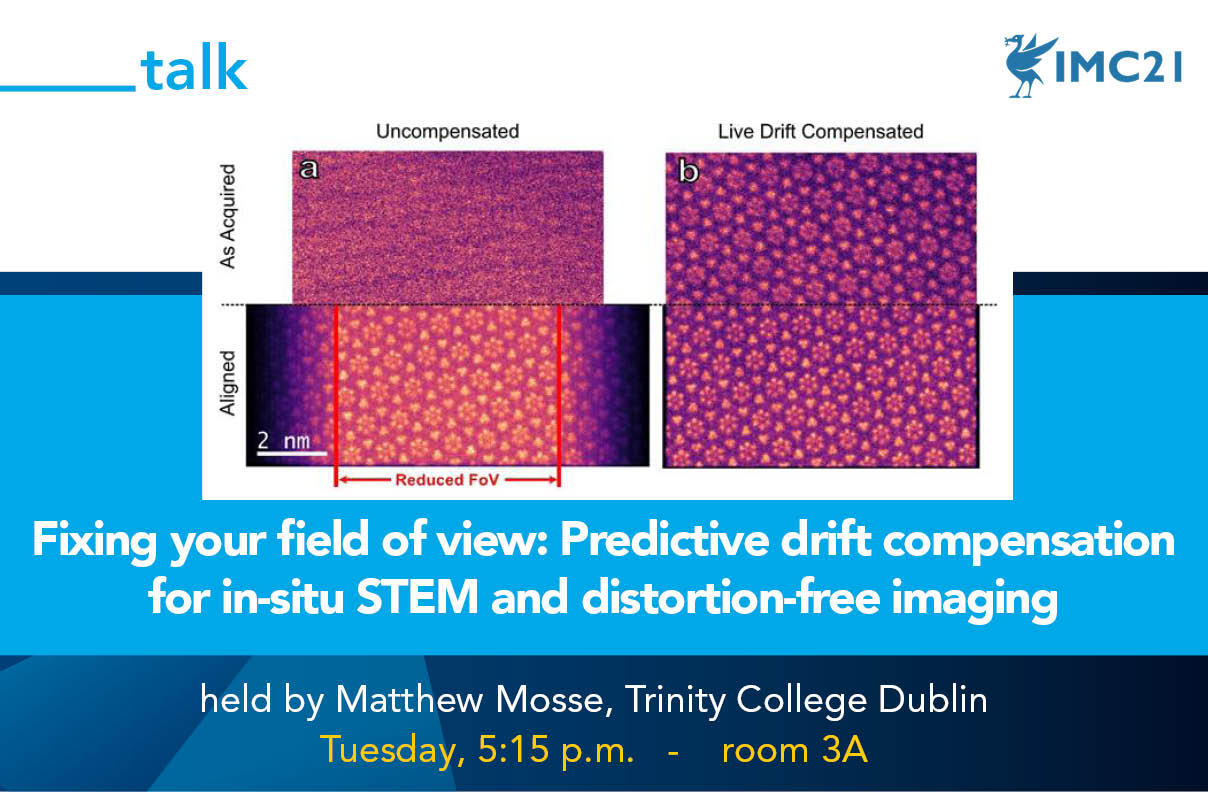
Fixing your field of view: Predictive drift compensation for in-situ STEM and distortion-free imaging
Tuesday, September 1, 2026
17:15 (Europe/London)
Room 3A
This talk presents a new open-source method for predictive drift compensation in STEM, designed to correct sample movement during acquisition before it degrades image quality. The team of Trinity College Dublin and Universtiy of Warwick demonstrate how live scan modification can preserve field of view, reduce blur and shear, and improve both rigid and pixelwise drift correction across demanding imaging conditions. For their research, they were using our point electronic REVOLON.
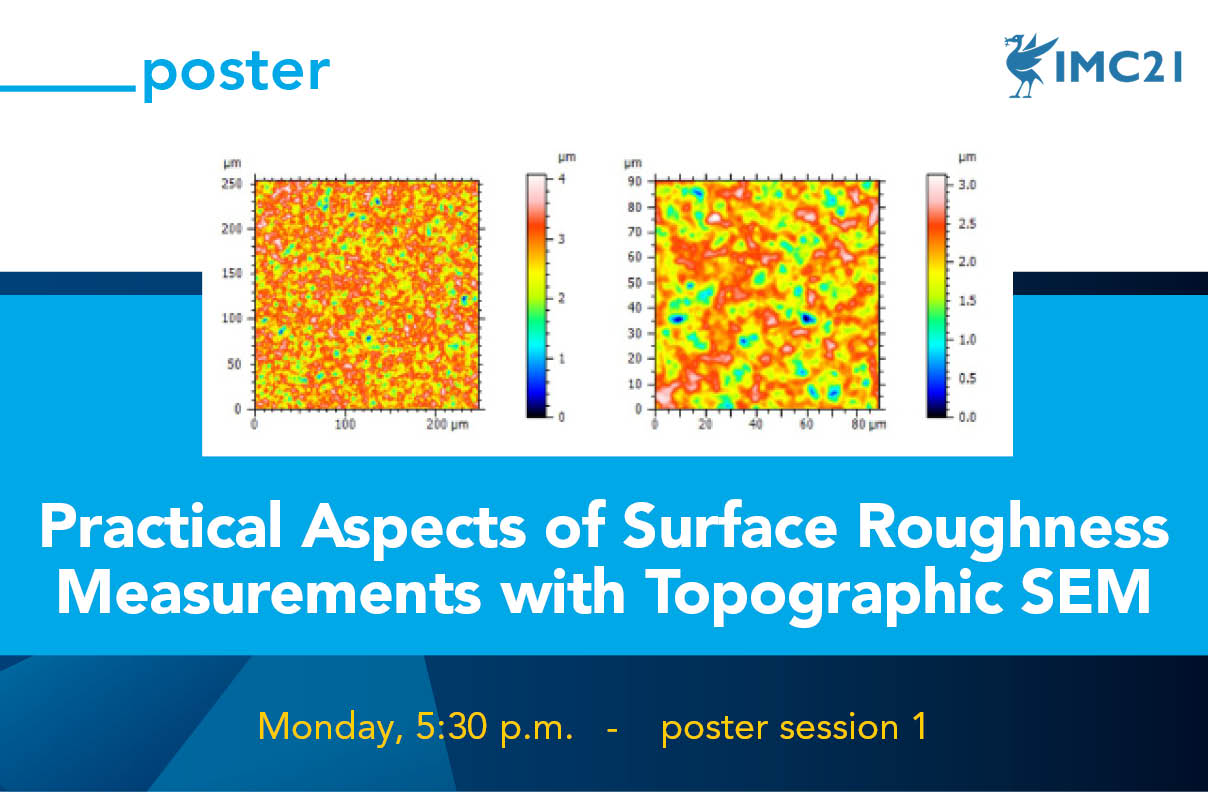
Practical Aspects of Surface Roughness Measurements with Topographic SEM
Monday, August 31, 2026
17:30 (Europe/London)
Poster Session 1
In our poster, we present SEM as an effective method for surface roughness measurements, capable of characterizing samples across micro- to nanometer scales with higher lateral resolution than conventional optical techniques.
We demonstrate this by comparing SEM-measured roughness values against a commercial silicon roughness standard, using our point electronic BSE-topography system and MountainsMap software for ISO 25178-compliant analysis.
Dr. Grigore Moldovan
CTO
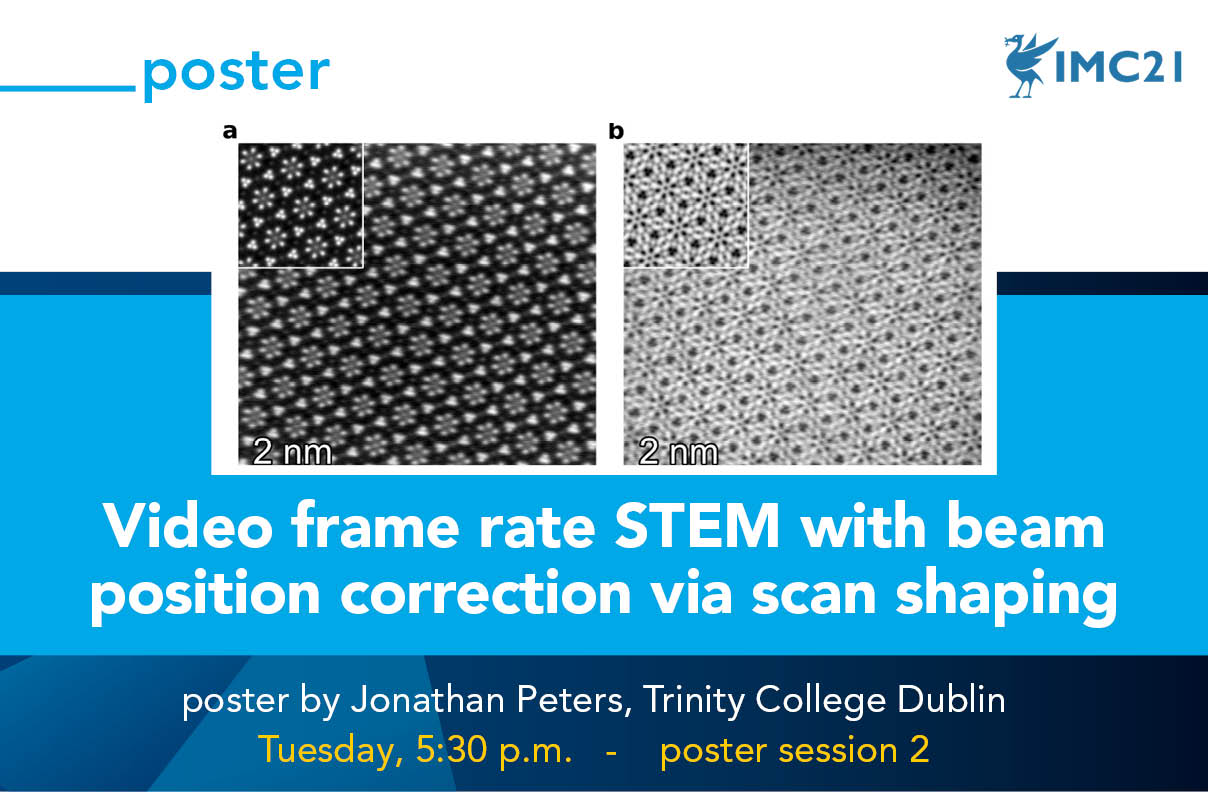
Video frame rate STEM with beam position correction via scan shaping
Tuesday, September 1, 2026
17:30 (Europe/London)
Poster Session 2
This poster demonstrates how scan shaping enables high-speed STEM imaging beyond traditional coil limitations, achieving 41 fps at 512×512 with 60 ns pixel dwell time. The team of Trinity College Dublin implemented a method of scan shaping, based on a serpentine scan to achieve high temporal and spatial resolution imaging. The poster also discusses new limiting factors to STEM scan speeds, and approaches to increasing framerates further.
Our contact: info@pointelectronic.de

Empirical formula for non-Lambertian electron backscattering behaviour deduced from Monte Carlo simulations
Thursday, September 3, 2026
17:30 (Europe/London)
Poster Session 4
This poster by Physikalisch Technische Bundesanstalt (PTB) demonstrates that electron backscattering does not always follow Lambert’s law and can be described more accurately with an empirical formula derived from Monte Carlo simulations. It highlights how material, electron energy, and sample tilt shape the backscattering signal.