SEM Modernization of a Zeiss LEO 1530 for KIT Karlsruhe
Exchange with Prof. Dr. Ralph Krupke, Research Unit Chair for Charge Transport and Light-Matter Interaction in Carbon Nanosystems, and Simone Dehm, at the Institute of Nanotechnology, and Simone Dehm, Lab Technician for Nanofabrication and electron-beam lithography at the Institute of Nanotechnology, Karlsruhe Institute of Technology (KIT)
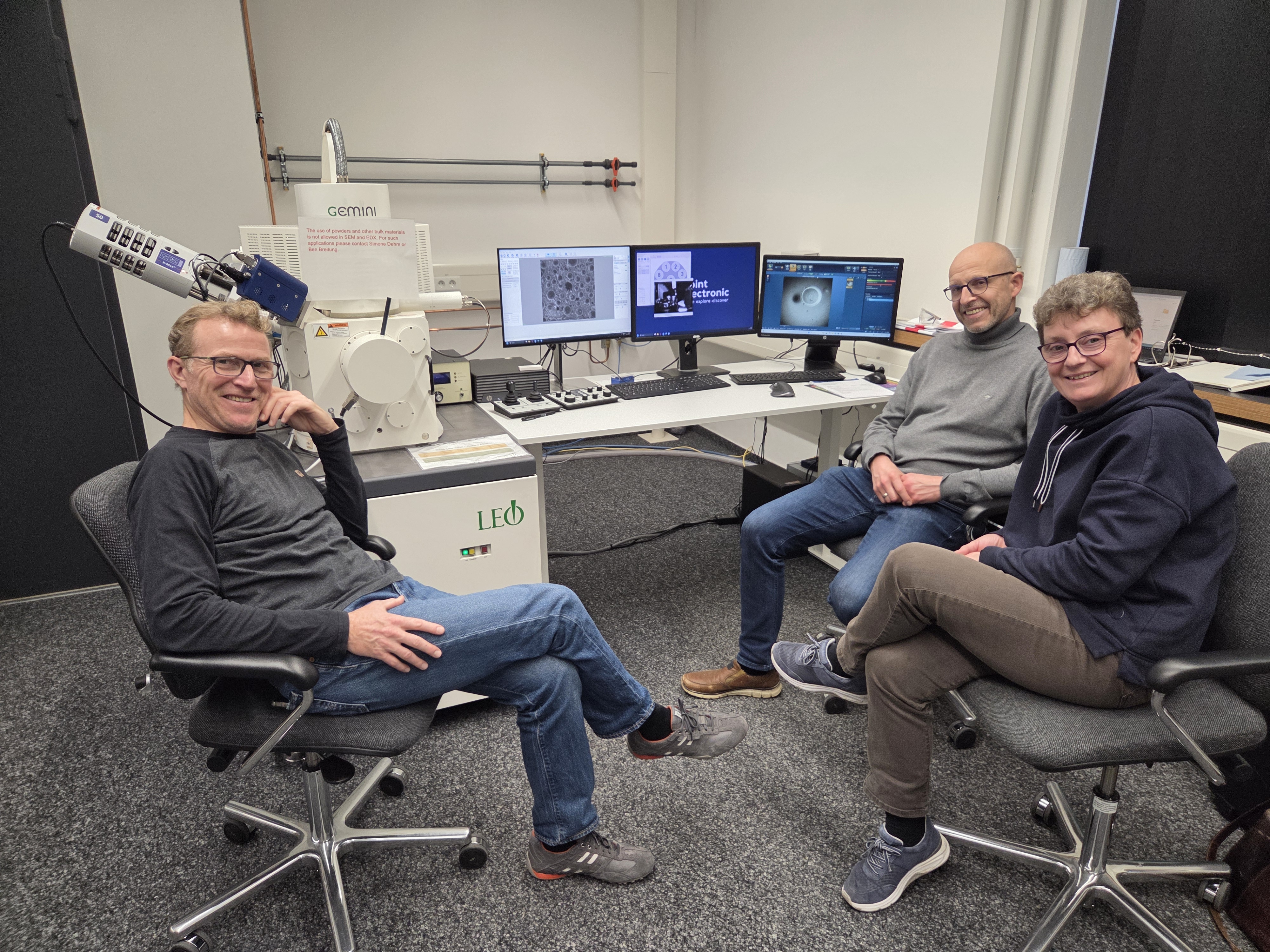
The best compliment for a point electronic SEM Modernization? The customer decides to have a second instrument modernized by us as well.
Following the modernization of their LEO 1530 for electron beam lithography, the team of Ralph Krupke and Simone Dehm at Karlsruhe Institute of Technology (KIT) opted opted for another upgrade this year.
We installed a SEM modernization including a new fore pump. Existing detectors and interfaces were fully integrated.
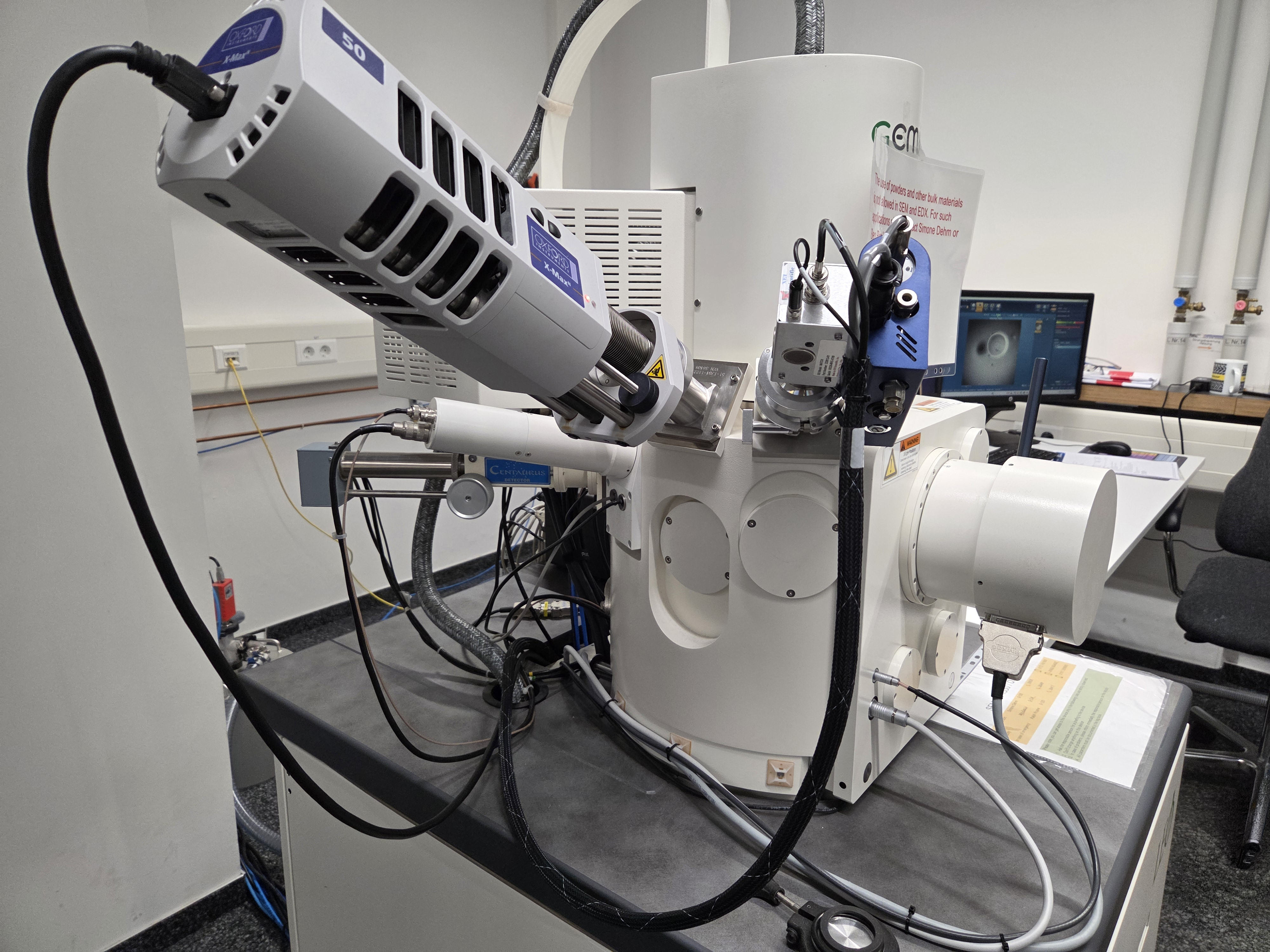
Better image quality
“With the existing detectors, we achieve better resolution and image quality after the modernization than before - particularly thanks to the significantly improved signal-to-noise ratio provided by the new electronics,” says Simone Dehm. “This is a major advantage, especially when working with low-contrast samples.”
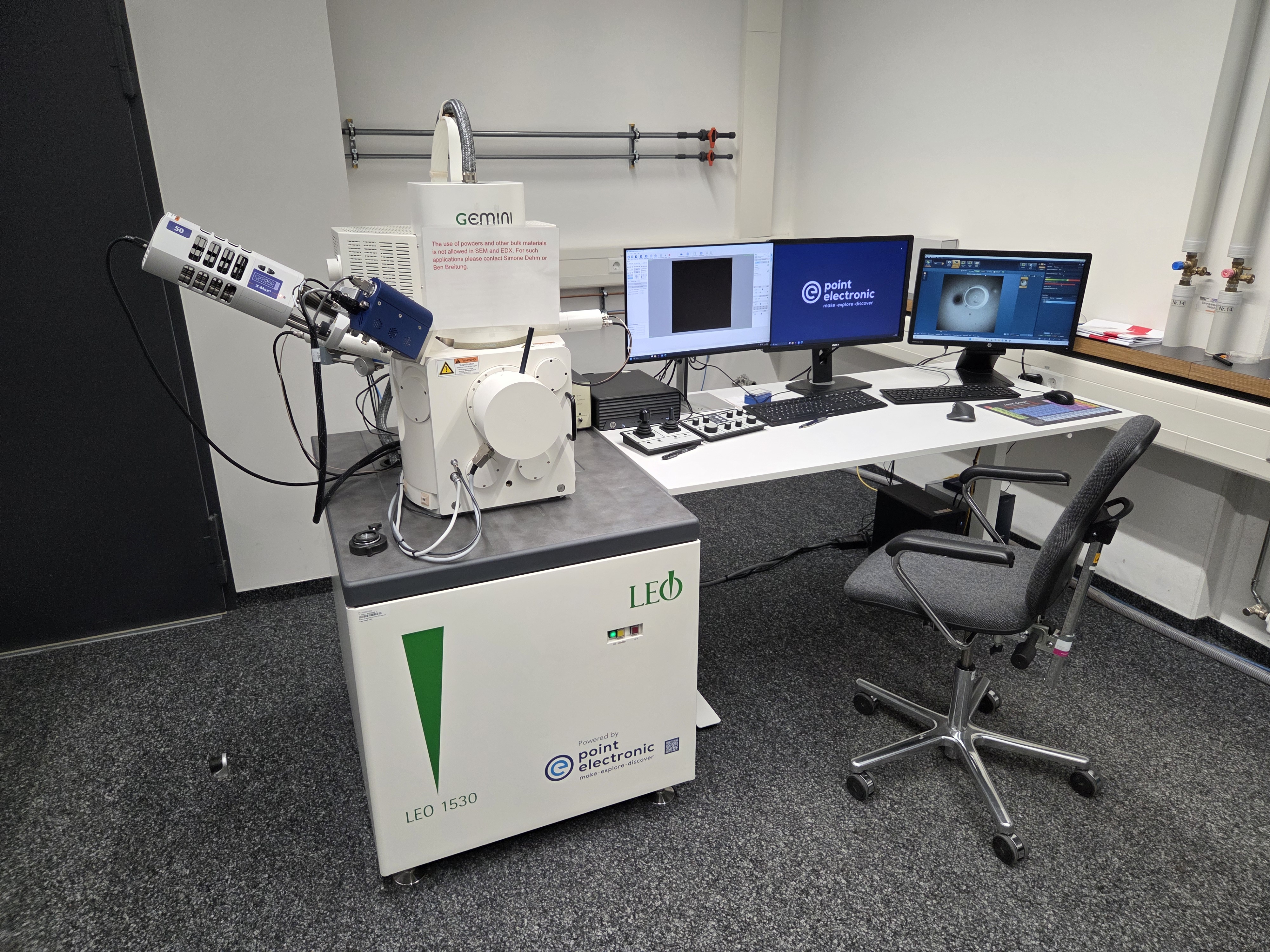
Intuitive software
“The point electronic control software is perceived as significantly more user-friendly by both beginners and experienced users,” says Ralph Krupke, summarizing the feedback from his colleagues. Whether it’s customizable buttons for different detectors and scan quality settings, the stage’s click-to-move function, or manual control of individual vacuum components, “We’ve received nothing but positive feedback so far.”
KIT uses the modernized LEO 1530 as a multi-user instrument with around 30 people – ranging from battery materials through materials synthesis to quality management.
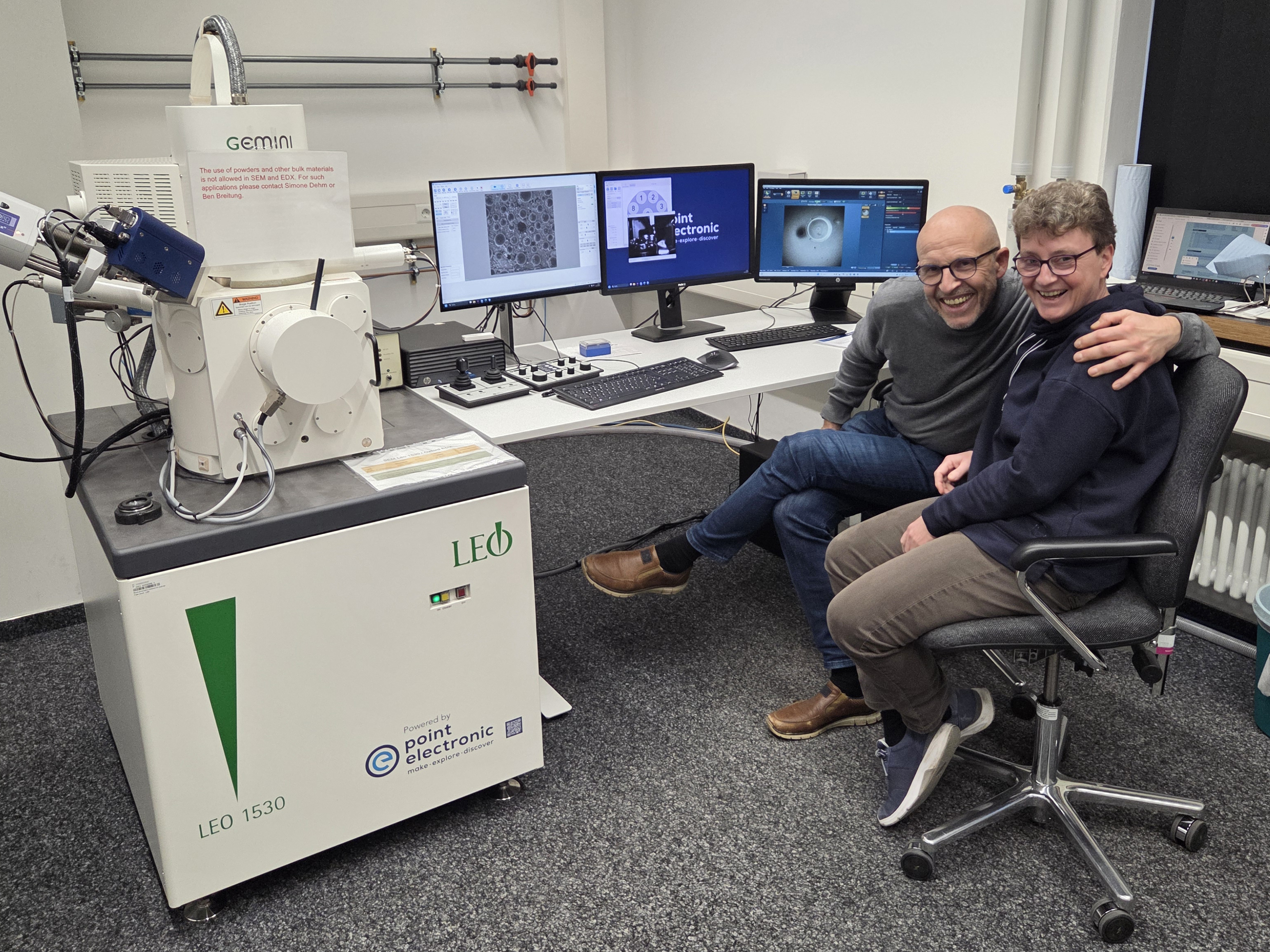
Adaption to customer requirements
We were able to implement two additional feature requests from the KIT team just a few days later through a software update. “point electronic also did a good job integrating our complex detector system,” Krupke emphasizes.
Many thanks to Prof. Dr. Ralph Krupke, Simone Dehm, and the entire KIT team – we wish you continued success with the modernized SEM.